Sheet 01 — Infrastructure engineering
Systems designed to stay upwhen the pressure arrives.
VERTICAL OPS engineers the infrastructure layer behind working software: cloud platforms, automation pipelines, security controls, integration paths and the monitoring that proves all of it is behaving as designed.
- Discipline
- Documented engineering
- Method
- Change as reviewed code
- Outcome
- Predictable operations
02Company
An IT company built around infrastructure that other people depend on
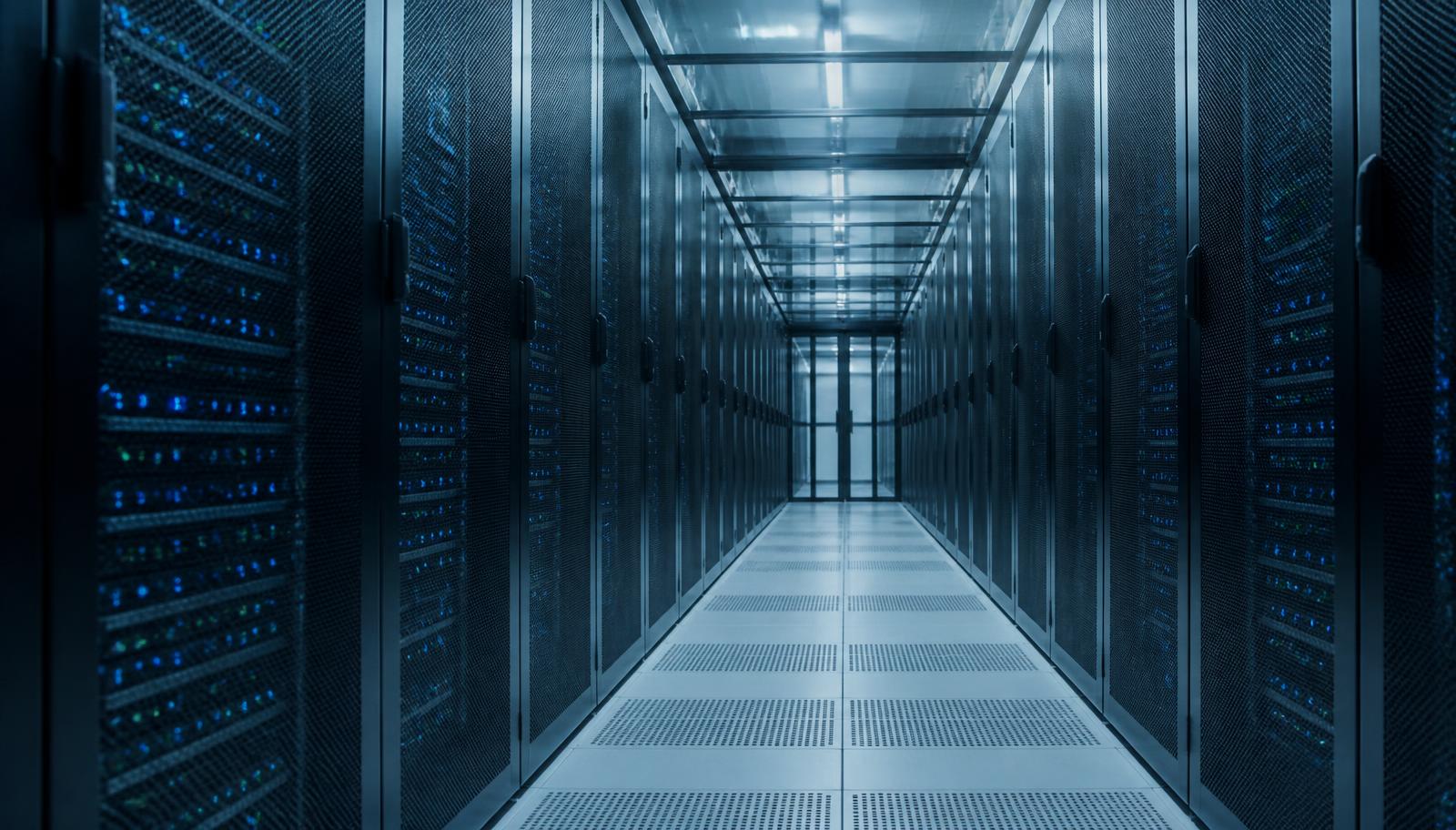
VERTICAL OPS provides infrastructure, cloud, cybersecurity, DevOps, automation, systems integration, monitoring and technical consulting services. The work sits below the application layer, where availability, recoverability and access control are decided long before an incident happens.
Every engagement begins with reading the environment as it actually exists — the undocumented dependency, the manual step nobody wants to touch, the service with no owner. Findings are written down, discussed in plain language, and turned into a sequence of changes that can be reviewed, tested and reversed.
03Core capabilities
Eight engineering disciplines, operated as one practice
- 01
Infrastructure engineering
Server estates, networking, storage and platform capacity designed for known load and known failure modes.
- 02
Cloud architecture
Landing zones, account structure, identity boundaries and workload placement across public, private and hybrid environments.
- 03
DevOps delivery
Build, test and release pipelines that make deployment an ordinary event instead of a scheduled risk.
- 04
Automation
Infrastructure defined as code, so environments can be rebuilt from a repository rather than from memory.
- 05
Cybersecurity support
Hardening, segmentation, access governance, patch discipline and detection tuned to the systems in use.
- 06
Systems integration
Reliable interfaces between platforms, directories, data stores and third-party services.
- 07
Monitoring & observability
Metrics, logs and traces assembled into a signal an on-call engineer can act on.
- 08
Technical consulting
Independent assessment, architecture review and long-term platform planning.
04Cloud infrastructure
Cloud platforms shaped by workload, not by trend
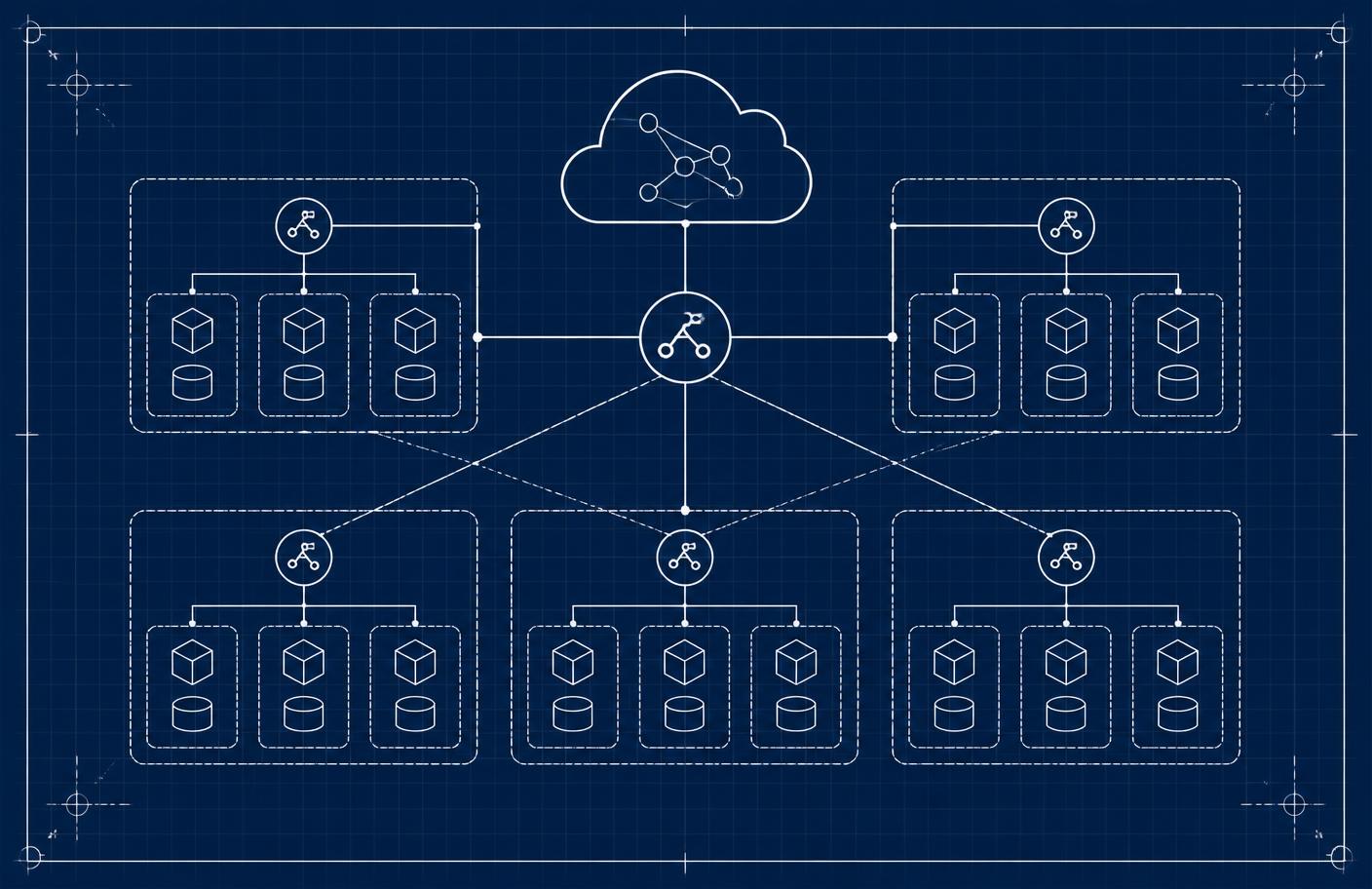
A cloud environment is only as good as the decisions encoded into it: how accounts are separated, where state lives, which identities can reach which resources, and what happens when an availability zone stops answering.
- Account and network topology with explicit trust boundaries
- Workload placement matched to latency, data residency and recovery requirements
- Migration sequencing that keeps a working path back at every step
- Cost visibility tied to owners and environments rather than a single invoice
05 — DevOps & automation
Delivery pipelines that remove the human error, not the human judgement
Manual deployment steps are where outages are born. VERTICAL OPS converts release and provisioning work into reviewed, repeatable pipelines: the same commands run in staging and production, the same state is version controlled, and every change has an author and a rollback.
Source control
Infrastructure and pipeline definitions live beside application code.
Automated verification
Linting, policy checks and tests run before anything reaches an environment.
Progressive rollout
Changes are released in controlled stages with health gates.
Reversibility
Every deployment has a documented and tested way back.
06Cybersecurity
Security treated as an operating property of the system
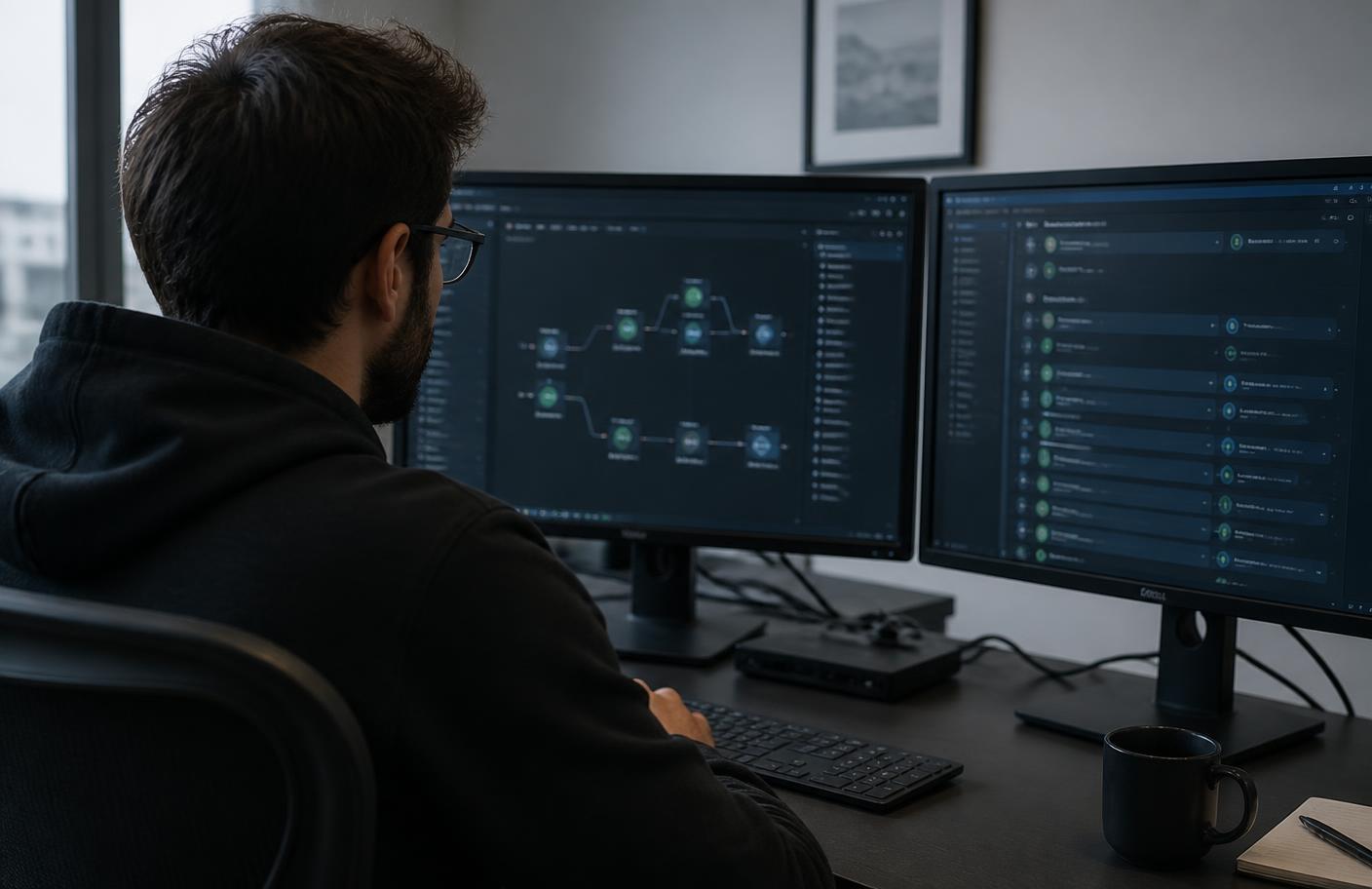
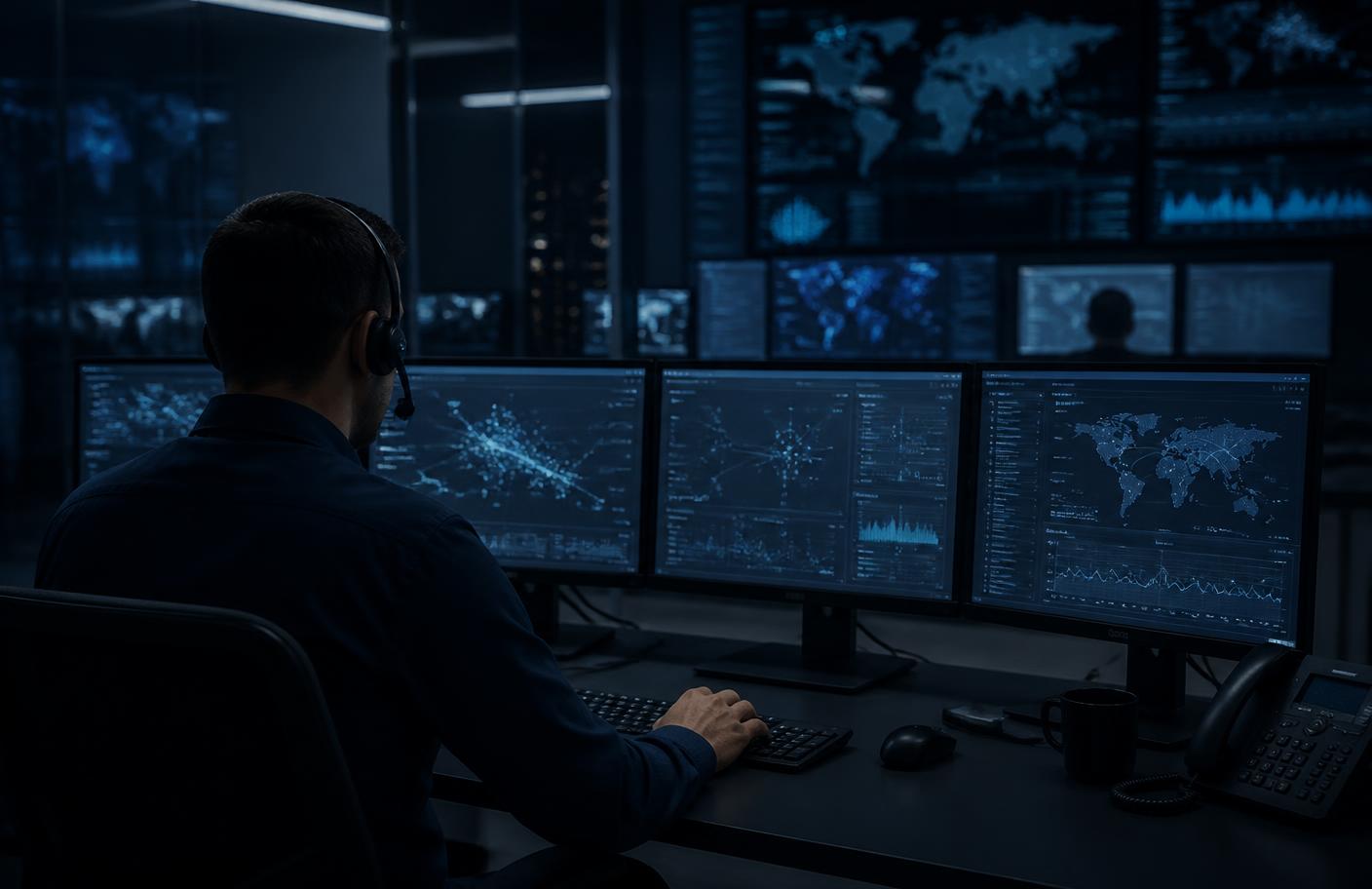
Controls that exist only in a policy document do not survive contact with production. VERTICAL OPS implements security where it is enforced: in identity configuration, network segmentation, patch cadence, secrets handling, backup integrity and the detection rules that make unusual behaviour visible early.
Identity & access
Least-privilege roles, review of standing permissions, and separation between administrative and daily-use accounts.
Hardening & patching
Baseline configuration for servers, containers and network devices, with a maintenance rhythm that is actually sustainable.
Response readiness
Documented incident procedures, tested restores and log retention sufficient to reconstruct what happened.
07Monitoring & reliability
If it cannot be observed, it cannot be operated
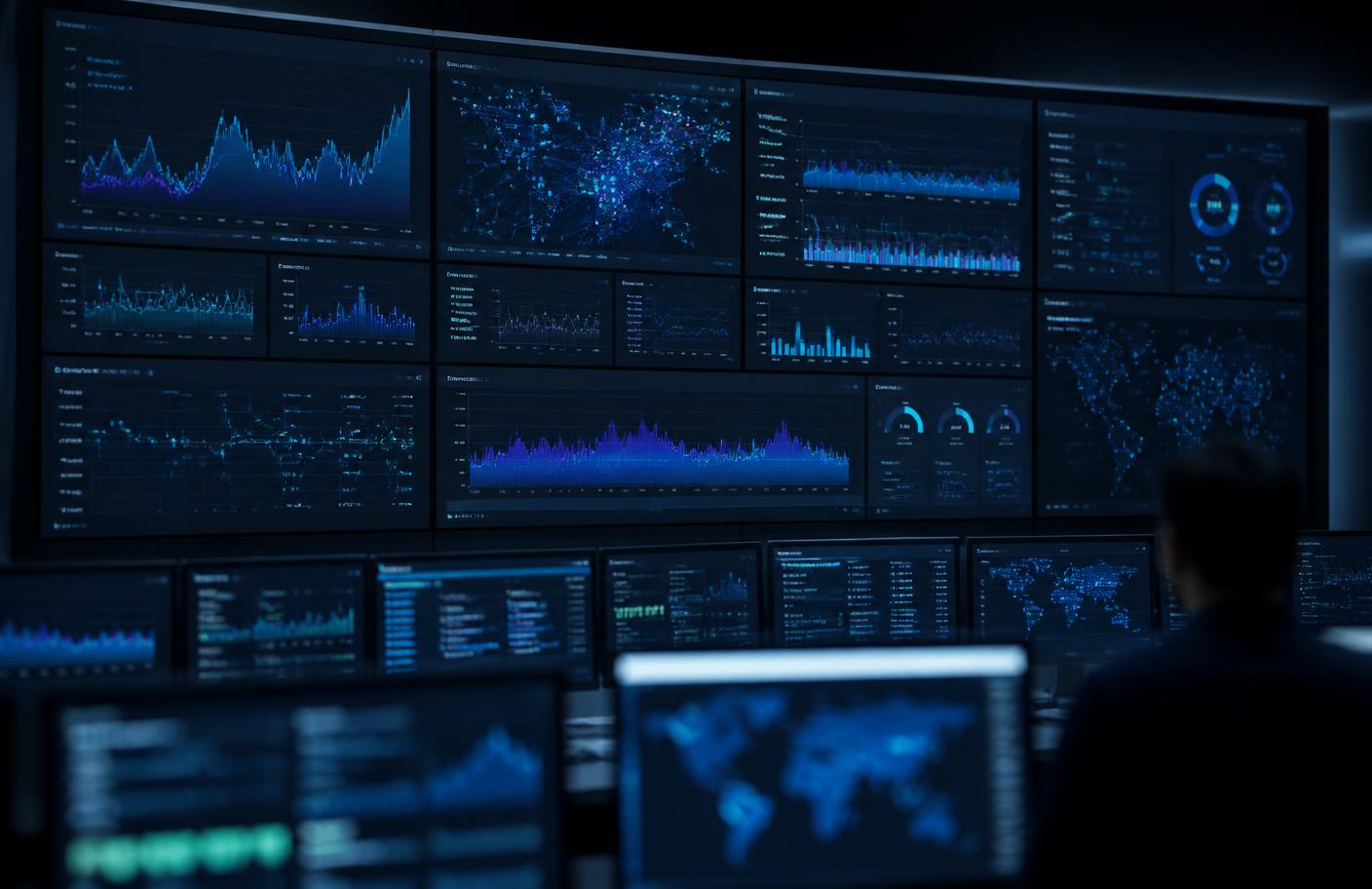
Observability work starts by deciding what "healthy" means for each service, then instrumenting exactly that. Dashboards are built for the person holding the pager at three in the morning, and alerts are tied to user-visible impact instead of raw resource counters.
- 01
Define
Service objectives written with the people who own the outcome.
- 02
Instrument
Metrics, structured logs and traces collected consistently across services.
- 03
Alert
Notifications limited to conditions a human must act on.
- 04
Review
Post-incident findings fed back into configuration and documentation.
08Systems integration
Connecting platforms without creating a new single point of failure
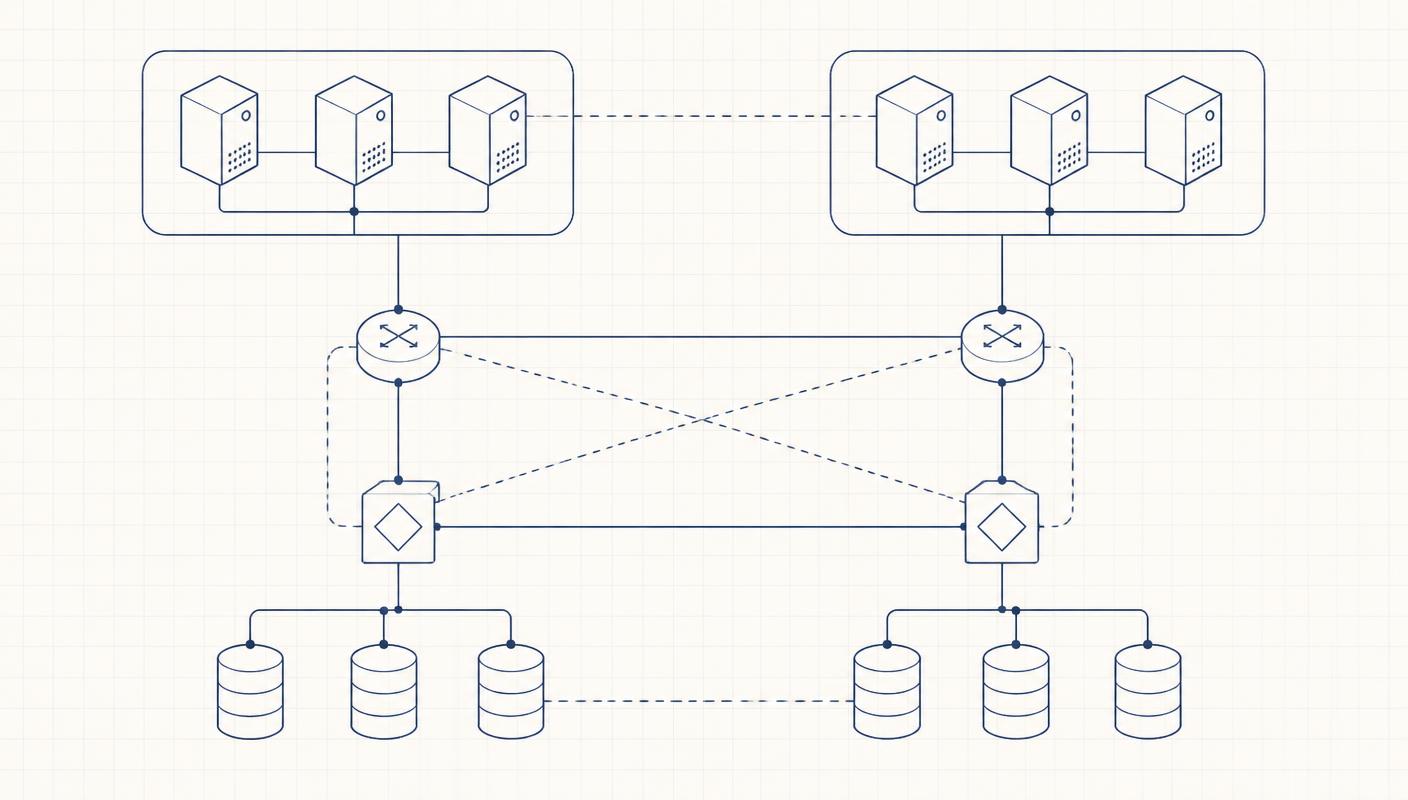
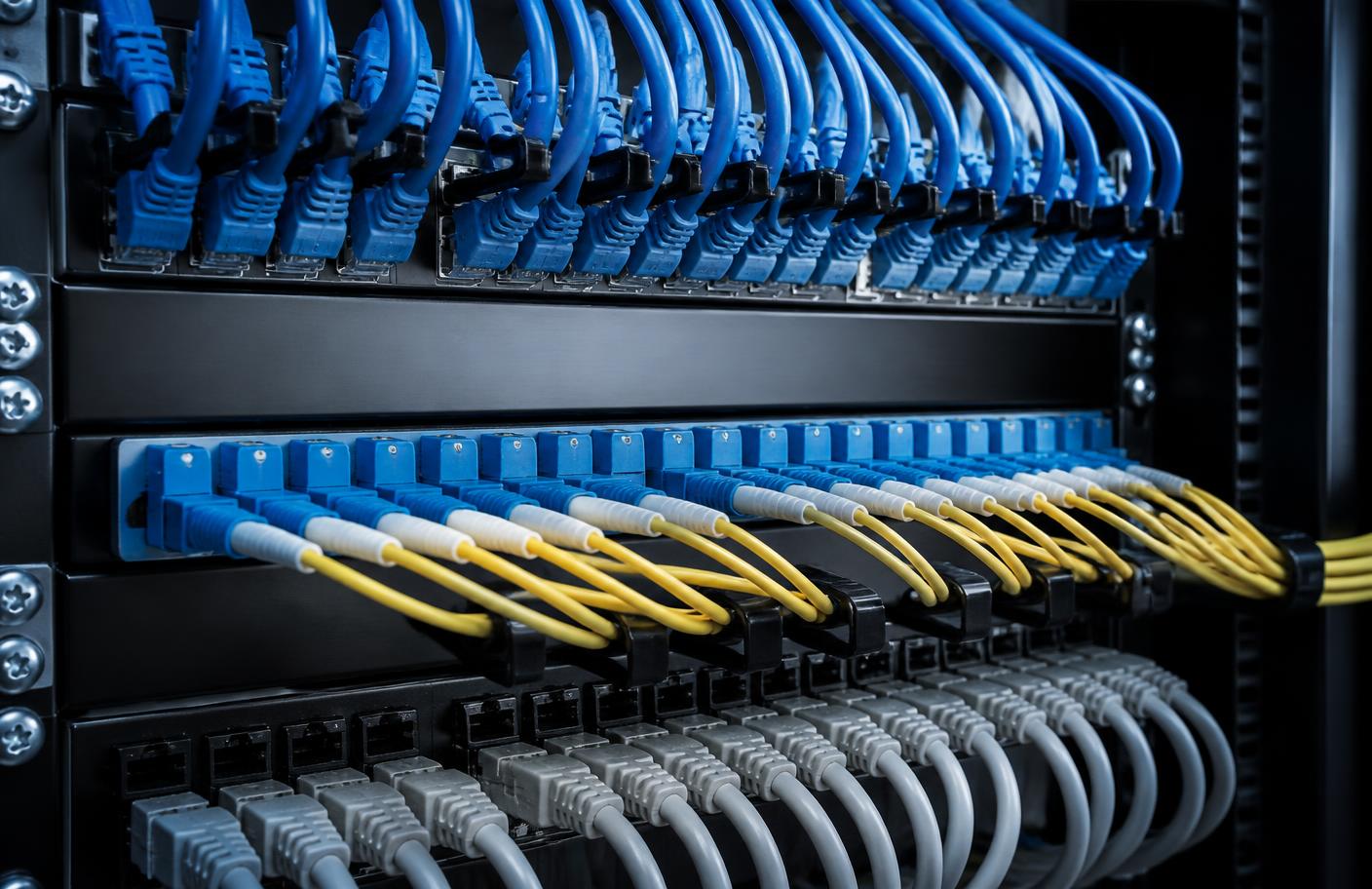
Integration work is where hidden coupling accumulates. VERTICAL OPS maps the data that has to move, agrees the contract between systems, and builds interfaces that fail loudly and recover cleanly instead of silently dropping records.
- Directory and identity federation
- One authoritative source of identity across platforms.
- Application and data interfaces
- Documented contracts, retries, idempotency and error visibility.
- Legacy system bridging
- Controlled access to older systems that still hold critical processes.
09Technology consulting
Independent technical judgement, written down
Consulting engagements produce documents that can be acted on: a current-state assessment, a risk register tied to specific systems, an option comparison with trade-offs stated honestly, and a roadmap sequenced by dependency rather than by enthusiasm.
Where a recommendation carries uncertainty, that uncertainty is stated. Where an existing system is working well, it is left alone.
10Working process
Five stages, each with a written output
- Stage 1
Discovery
Interviews, inventory and access review to establish what exists today.
- Stage 2
Assessment
Findings, risks and dependencies documented and prioritised together.
- Stage 3
Design
Target architecture, migration path and rollback strategy agreed in writing.
- Stage 4
Implementation
Changes delivered in reviewed increments with monitoring in place.
- Stage 5
Handover
Runbooks, diagrams and knowledge transfer so the team can operate it.
11Business scenarios
Situations where this work matters most
Growth outpacing the platform
A system that was adequate at one scale starts failing at another, and capacity decisions can no longer be postponed.
Migration to cloud or between providers
Workloads must move without extended downtime and without losing operational control.
Tightening security expectations
Customers, insurers or regulators require demonstrable controls, logging and recovery capability.
Release friction
Deployments are rare, manual and stressful, so improvements queue up behind risk.
Inherited environments
Infrastructure was built by people who have moved on, and documentation no longer matches reality.

12 — Operating principles
The rules the work is held to
Write it down
A change that is not documented is a change that cannot be maintained by anyone else.
Least privilege by default
Access is granted for a reason, scoped to a role, and reviewed rather than assumed.
Reversible over clever
A simple design that can be rolled back beats an elegant one that cannot.
Measure before deciding
Performance and capacity conclusions come from data collected in the real environment.
No silent failure
Errors surface as signals, not as gradually degrading behaviour nobody notices.
Leave it operable
Success means the client's own team can run the system without external dependency.
13Technology capabilities
The layers VERTICAL OPS works across
- Compute
- Virtual machines, containers, orchestration and serverless workloads.
- Networking
- Segmentation, routing, VPN and edge access control.
- Storage & data
- Databases, object storage, replication and backup verification.
- Platform tooling
- Infrastructure-as-code, configuration management, secret stores.
- Delivery
- CI/CD systems, artefact registries and environment promotion.
- Observability
- Metrics, log aggregation, tracing and alert routing.
14Frequently asked questions
Questions asked before an engagement begins
- What kind of organisations does VERTICAL OPS work with?
- VERTICAL OPS works with organisations that run business-critical systems and need engineering support for infrastructure, cloud platforms, security operations and automation. Engagements range from a single architecture review to continuous operational support alongside an internal IT team.
- Can VERTICAL OPS work with an existing internal IT team?
- Yes. Most engagements are collaborative. VERTICAL OPS documents decisions, works inside the client's own tooling and version control, and hands over runbooks so the internal team can operate the platform independently after the work is complete.
- How does an engagement usually start?
- It starts with a discovery conversation and a technical review of the current environment. The outcome is a written assessment describing observed risks, dependencies and a prioritised sequence of work, so decisions are made on documented evidence rather than assumptions.
- Which cloud platforms and technologies are supported?
- Work covers major public cloud platforms, private and hybrid infrastructure, Linux and Windows server estates, container orchestration, infrastructure-as-code tooling, CI/CD systems and open-source observability stacks. Tooling is selected to fit the environment rather than a fixed preference.
- How is a production change handled safely?
- Changes are defined in code, reviewed by a second engineer, tested in a non-production environment and applied through a repeatable pipeline with an explicit rollback path. Monitoring is verified before and after the change so any deviation is visible immediately.
- How can we get in touch?
- Write to paulinejordan197@gmail.com with a short description of your environment and the outcome you are looking for. A response will include the information needed to scope the next step.
15Contact
Reaching VERTICAL OPS
Correspondence is handled by email. A short description of your environment, the systems involved and the outcome you need is enough to begin a technical conversation.
- Company
- VERTICAL OPS
- Website
- verticalopsgroup.com
16Summary
Infrastructure work that outlives the engagement
VERTICAL OPS exists to make technical environments understandable, defensible and operable. That means designing systems with clear boundaries, automating the parts that should never depend on memory, securing access before it becomes a liability, and instrumenting everything well enough that problems are noticed as signals rather than as outages.
The measure of a finished engagement is simple: the client's own team can explain the platform, change it safely and recover it under pressure.